Hardware » Mac » Tech Ease: The first step to adding a printer is to make sure the USB cable is properly. Your printer should be listed on the left hand side of the window. How do I create a computer-to-computer wireless network? HP DeskJet Ink Advantage 2546 Driver Download, Wireless Setup, Software Download For Mac, Windows, And Reviews – HP Deskjet Ink Advantage 2546 Drivers are the best printers available on the market. Inkjet printers are an example of innovative technology. This wireless printer is suitable for use at home and in the office.
There are many reasons that you might want to set up a network at home or in the office. If you set up a network, you'll only need one printer in the house instead one for each computer. Once you've set up your home network with a Mac and a PC, you'll want to share the printer so both computers can access it. In Mac OSX 10.3 onward the printer setup enables you to share a printer with a Microsoft PC source: Apple.
The Mac must be in a network with the PC and the printer must be physically connected to a port on the networked PC source: CNET. We will now show you how to connect a computer running Windows 7, and a Mac. On the PC with Windows 7.
What do you get when you mix four computers, two operating systems, one printer and a wireless home network? If you are lucky, a convenient way to share the printer among all computers.
If you are like many people, however, you get computers that can’t print.
Sharing a printer is one of the most basic appeals of wireless networking, and it can be pretty simple if your computers run the Windows operating system. Add a Mac to the mix, which is becoming more common, and the process can get complicated, pronto.
I set out to find the easiest way to share a printer, using my own home equipment: two laptops, a Dell Windows 7 desktop and an Asus Windows 7 netbook. My printers, a Hewlett-Packard LaserJet P1006 and a Samsung ML-1740, are both elderly, low-end lasers. (No printers with built-in Wi-Fi here.)
The basic problem with setting up a shared printer is that the U.S.B. connection on home printers was not designed to carry networking information. Sharing a printer via U.S.B. requires a tricky translation from U.S.B.-based protocols to Ethernet or Wi-Fi protocols. (Feeling a little befuddled yet? That’s what is happening to the printer.)
The squabble between Windows and Mac devices has its roots in the use of different printer software (typically referred to as drivers) and networking protocols, two under-the-hood technologies that are inscrutably complicated. And, as is the case with most Americans, computers and networking devices tend to be fluent in only one operating language: either Windows or Mac.
Continue reading the main story“This can be the crux of a lot of challenges,” said Chris Mesa, program manager for transactional printing solutions, mobility and Web services at Hewlett-Packard. “Whenever you put a U.S.B. solution in the middle of a network solution, you will end up with limitations.”
These limitations, which can include an inability to connect and incompatibility with the scanning functions of all-in-one printers, can be easily avoided by purchasing a new printer with integrated Wi-Fi or Ethernet networking. The Hewlett-Packard OfficeJet 6000 Wireless ($120), the Epson WorkForce 610 ($200) and the MG6120 ($199) are three of the more popular models.
But if you are not ready to throw out your older printer, there are a handful of ways to share it on a home network. Even if you don’t have a Mac in the mix, these methods can help you get connected.
In my tests, I did not pursue two methods known for balky setup and intractable incompatibilities with printers: use of a stand-alone print server (a device that sits between the printer’s U.S.B. port and the router’s Ethernet port to bridge the networking gap) and a Wi-Fi router with an integrated print server.
Each of the following approaches has its advantages and drawbacks, and not one is completely bulletproof for mixed Windows/Mac networks. But with some tweaking, at least one should work for you.
The Cheapest
What you need: A U.S.B. printer and a networked computer.
Pros: No new equipment to buy; it’s easy and reliable.
Con: The computer must be left on to use the printer.
In Windows, this is an easy setup that requires no additional equipment. I connected a U.S.B. printer to my desktop, which is hard-wired to my router, then enabled printer sharing in Windows and ran the Add printer wizard and selected Add a local printer. I installed the driver, right-clicked the printer icon, clicked Printer properties and selected the Share tab to enable sharing.
To access the printer on my wireless Windows netbook, I started the Add printer wizard, but this time selected Add a network, wireless or Bluetooth printer. The wizard identified available printers by computer name/printer name. I selected the right printer, installed the drivers and was set to print.
Newsletter Sign Up
Continue reading the main storyThank you for subscribing.
An error has occurred. Please try again later.
You are already subscribed to this email.
- Opt out or contact us anytime
It wasn’t so direct with my Mac, which couldn’t “see” the Dell computer on the Windows network. To adjust, I enabled LDP Print Service on the Windows desktop. (Control Panel>Programs>Turn Windows Features On or Off, >Enable LPD Print Service.)
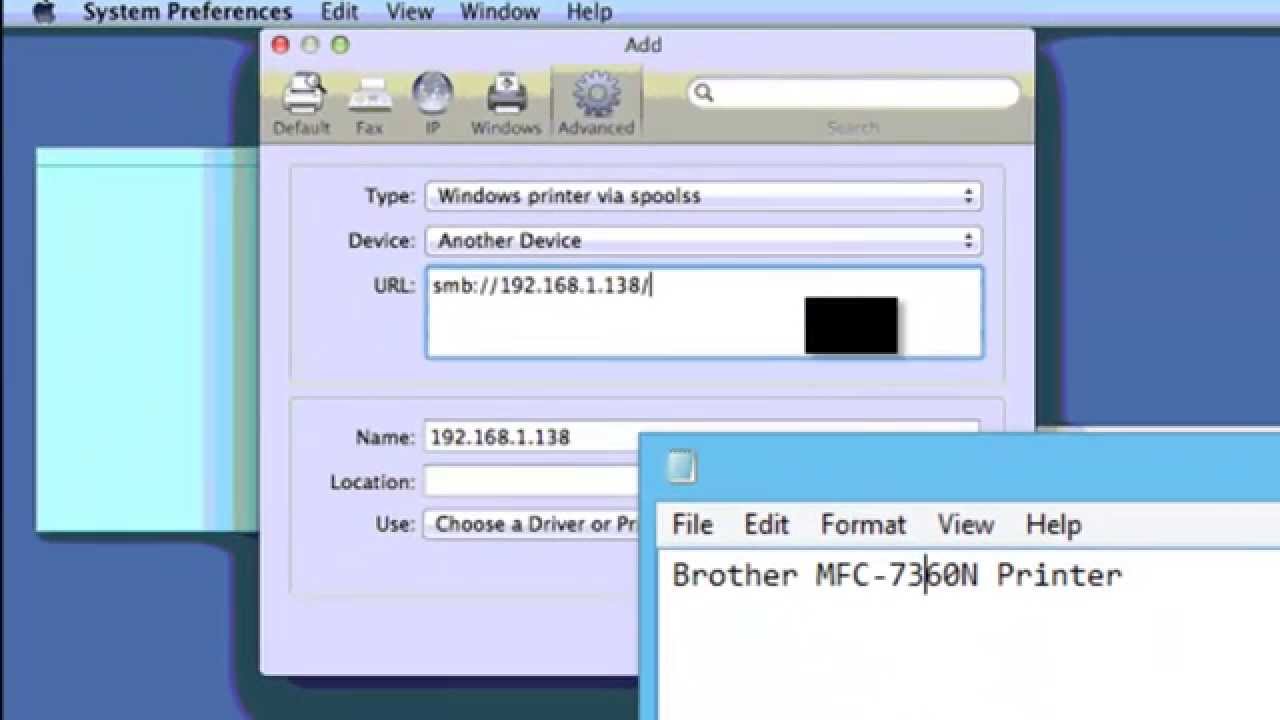
Back at the Mac, I navigated to Add Printer, held the Control key and right-clicked on the toolbar, then selected Customize the toolbar and dragged the Advanced icon onto the bar. Next, I clicked Advanced, and in the Type field selected LPD/LDR Host or Printer. Here it gets a little complicated: In the URL, you will need to input your printer as //PC name/Printer name. On my network, the address was lpd://rik-dell/LaserjetP1006. I clicked Add, installed the printer driver, and printed a test page. Success! But needlessly complicated. 2002 xbox game emulator for mac pc.
The Easiest
What you need: A new router with a U.S.B. port and a printer-sharing app.
Pros: Easy setup; almost instant printer sharing; works well with Windows and Macs.
Cons: You probably need to buy a new router; only one printer at a time can access the printer.
I installed a Belkin Play Max Wireless Router ($99 at Amazon) on my home network, then connected my printer to the router’s U.S.B. port. I installed the Belkin Print Genie app, and a dialog box immediately popped up and asked if I wanted to connect to my printer. I clicked Yes, installed the drivers, and printing was enabled immediately. You’ll need to install the Print Genie app (and drivers) on every computer. Installation was fast and easy on both Windows and Mac machines.
The Most Lauded
What you need: An Express router.
Pros: Flexible, many uses; can be very easy to set up.
Cons: Can also be very complicated to set up.
I thought the $99 AirPort Express, which can also share music among computers, would be a better investment than buying a dedicated print server, which can cost almost as much yet does only one (unexciting) thing.
I was expecting an almost magical ease of use, given the user reviews I had read. Yet my first attempt at installing the AirPort Express was astonishingly frustrating. It didn’t work with the H.P printer, even after an hour and 20 minutes on the phone with tech support. When I plugged in my Samsung printer, the AirPort Express immediately recognized it.
I figured this must be a fluke, because the device consistently gets raves from users. So a few days later I installed the AirPort Express on another home network, and I was printing within two minutes. The explanation? None. I learned researching in this story that there is no singular outcome when you’re working with so many variables.
Least Friendly to Macs
What you need: An N.A.S. device with a U.S.B. port for printer sharing.
Pros: No need to keep a PC on to print.

Cons: Could not connect to my MacBook Pros; printers sometimes drop off the network.
I plugged a printer into my $160 Seagate GoFlex Home N.A.S. drive. On a Windows machine, I launched the Add printer wizard and selected a network printer. The dialog box fetched the N.A.S. device and the printer attached to it. I simply clicked to select and installed the drivers. Lovely.
But I can’t recommend using a N.A.S. drive for mixed networks. After four hours with tech support for Seagate and Apple and trying two other N.A.S. drives, nothing worked.